

The LandCruiser is the backbone of Australian touring. Whether you’re a weekender heading to the coast or a full-time traveller chasing red dirt, the right tray, canopy, and accessory setup transforms your vehicle from a great 4WD into a genuinely capable expedition machine. We’ve built hundreds of touring rigs here at Canero, and we know exactly what separates the comfortable builds from the ones that leave you stranded or frustrated on remote tracks. This guide walks you through every decision you need to make to get it right the first time without costly mistakes or regret.

Why the LandCruiser Dominates Australian Touring
The 79 Series LandCruiser is the benchmark for touring builds, and it’s not even close. Here’s why: it’s simple, it’s proven, and parts are everywhere from Darwin to Adelaide. The 79 has been in continuous production since 1999, which means you’ll find workshop support in towns that don’t even have a petrol station. Resale values stay strong because every touring enthusiast, contractor, and farmer knows its reputation for reliability and simplicity. Reliability is legendary; the engine will outlast your interest in touring if you keep the oil clean and maintained.
Compare that to the 200 Series: it’s more comfortable on bitumen, the interior is airier, and it handles like a sedan on the freeway. But it’s thirsty on fuel, heavier to modify, and the complexity means more can go wrong out bush. The 300 Series is newer, clever, and incredibly refined, but you’re paying $130K+ for the vehicle before you even touch a tray. For serious off-grid touring on a reasonable budget, the 79 Series wins every time.
Resale is another factor most people miss. A 79 Series with a quality Canero tray and canopy holds value remarkably well through the years. You’re not building a depreciating asset; you’re building something that’ll sell to the next person who wants what you built. When you’re ready to upgrade or move on, you’ll find buyers queuing.
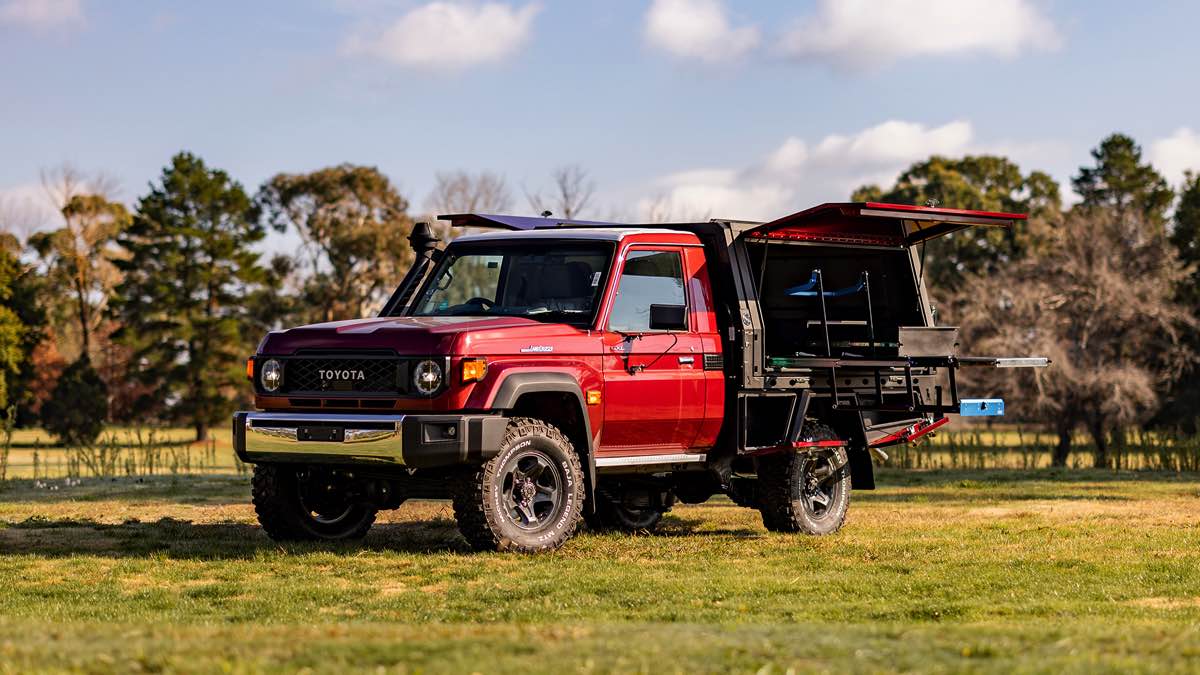
Choosing Between a Tray, Canopy, or Both
This is the first decision, and it changes everything about your rig and how you’ll use it on adventures.
A tray alone gives you flexibility. You keep the standard Toyota canopy or run an aftermarket pop-top. You can haul cargo, carry a roof tent, or throw on a removable canopy when you head out bush. Tradies and dual-purpose builders often stop here. You get 90% of the capability for half the investment.
A full canopy is the commitment. You’re building a home away from home. Full-length protection from the elements, dedicated storage, integrated power and water systems, a proper galley kitchen. A 79 Series with a quality canopy setup will cost you $25K–$50K all up, but you’re camping in genuine comfort. The trade-off is weight (eating into payload), reduced tray space for cargo, and you can’t easily convert back to open tray if your needs change.
Removable canopies are the sweet spot for touring. You get the covered bedroom and galley when you’re exploring, but you can unbolt the canopy and bolt on a tray for work or a quick run to the hardware store. The extra 50kg in weight is negligible against a 79 Series, and the flexibility is priceless. Most touring builders with serious plans choose this route because it balances capability with practical flexibility.
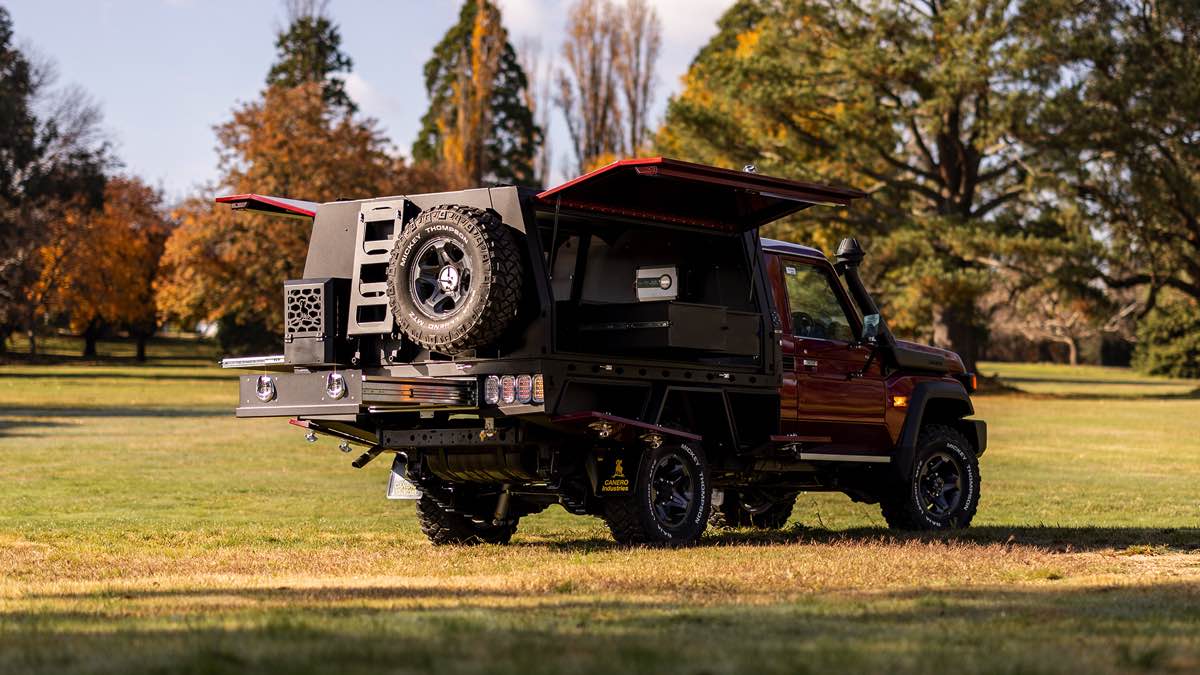
The Must-Have Accessories for Serious Touring
Once you’ve sorted tray vs canopy, the accessories define your actual comfort and capability out bush and on the road.
Start with a quality fridge. A 79 Series touring rig without cold beer and fresh food is a 79 Series that won’t make it past the first night. Dometic and Bushman are the standard-setters here. A 75L Dometic slide-out fits under most canopy benches and runs off your auxiliary battery. If you’re removing the canopy to do work, a 60L Bushman drawer fridge that integrates into a drawer system stays put and operates seamlessly.
Drawer systems are next. Full-width or split drawers for tools, clothes, camping gear, and supplies. A proper system keeps everything accessible and organised instead of rolling around every time you hit corrugation. Canero can integrate drawer-ready fitouts into most canopy designs.
A roof rack solves the luggage problem and keeps weight low. You can carry recovery gear, extra fuel, water jerry cans, and camping equipment. Just make sure your 79 Series has the payload to handle the weight, not all racks are equal, and overloading the vehicle is a genuine risk.
Water is the unsexy detail that matters most out bush. A 60L under-tray water tank gives you genuine independence. For extended touring, two 20L jerry cans on the rear rack plus the under-tray tank means you’re carrying 100L. That’s 3–5 days of water for two people depending on consumption rates.
Jerry can holders on the tray rails keep fuel and water secure and organised. Your spare fuel isn’t just for range, it’s insurance. An extra 20L jerry can means you’re never stranded if a fuel stop is closed or further than you expected.
Power and Water: Getting Your 12V Right
The 12V system is where most touring builds fail. You’ve got a fridge that needs power, a water pump, lights, a portable shower, phone chargers, maybe a 240V inverter for a coffee machine (no shame). Your factory alternator won’t cut it, and your factory battery will be dead by day two.
A Redarc 1250A DC-DC charger with a 100Ah Lithium Iron Phosphate battery is the weekender tier. You’re looking at $3,500–$4,500 all up. It keeps your fridge running and charges phones. It’s not enough for a 240V inverter or long off-grid stretches, but it works for coastal trips and weekend escapes.
The Explorer tier adds a Victron DC-DC charger and MPPT solar controller with a 100Ah LiFePO4 battery and 1200W inverter. You’re at $6,500–$8,000 installed. Now you can run a kettle, a laptop, and proper power tools. Solar keeps you topped up on sunny days, and you can genuinely go off-grid for a week if you manage power carefully.
The Nomad tier is serious: Victron MultiPlus 2000W inverter/charger with 200Ah LiFePO4, MPPT solar, and smart monitoring. This costs $12,000–$15,000 installed, but you’re running a full-size fridge, an induction cooktop, power tools, and extended off-grid expeditions. You’re not rationing power — you’re living normally, just in the bush.
The Aussie Expedition tier is the top build: Victron MultiPlus-II 3000W with 300Ah LiFePO4, Cerbo GX touchscreen monitoring, and a full solar array. You’re at $18,000–$22,000 installed, but you can run anything: multiple fridges, air conditioning, hot water systems, workshop power. This is the build for full-time touring or remote work.
Most 79 Series touring setups land at the Explorer or Nomad tier. It’s the balance between genuine capability and cost that doesn’t require you to mortgage the house.
What a Complete Canero Touring Setup Looks Like
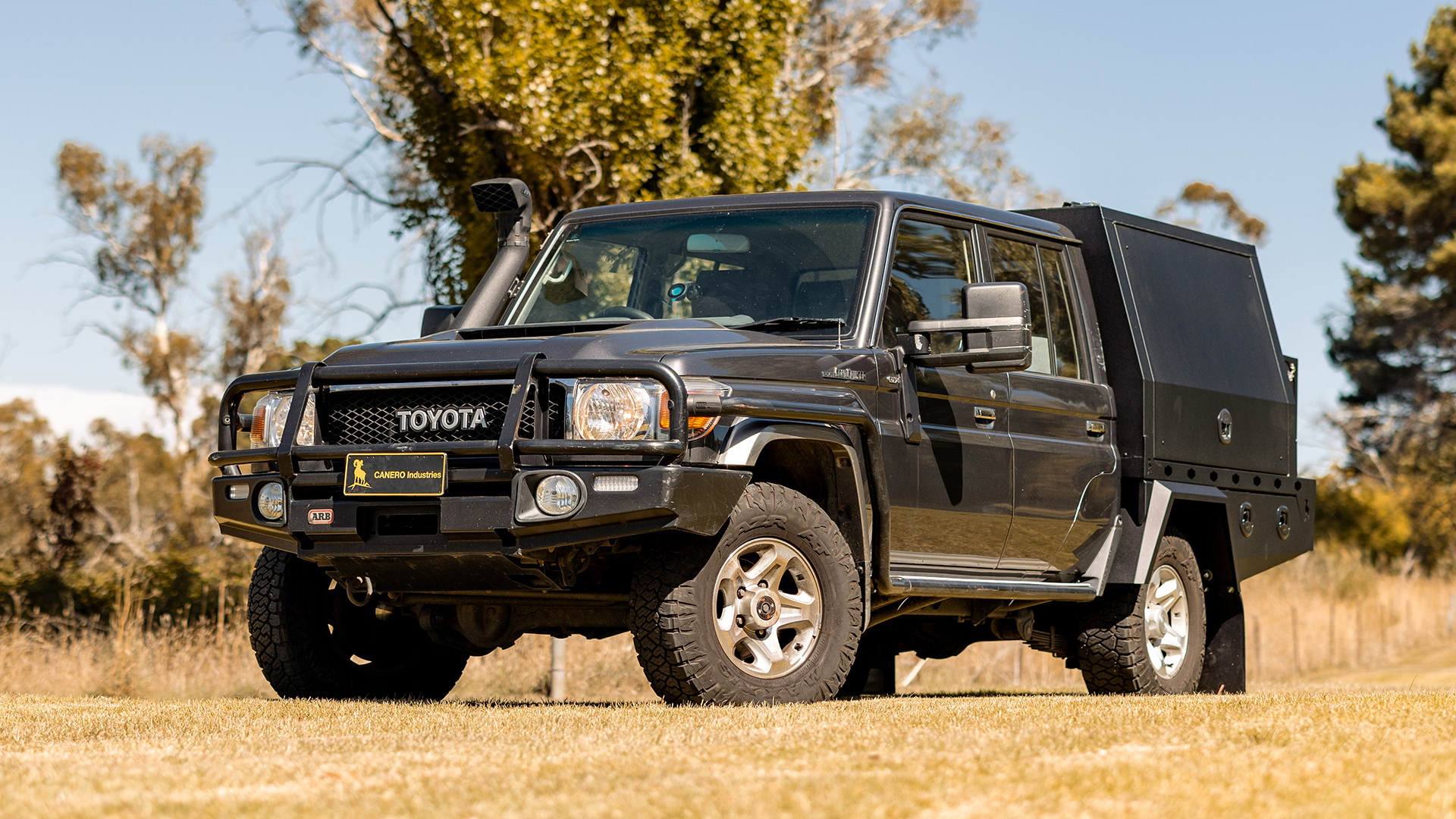
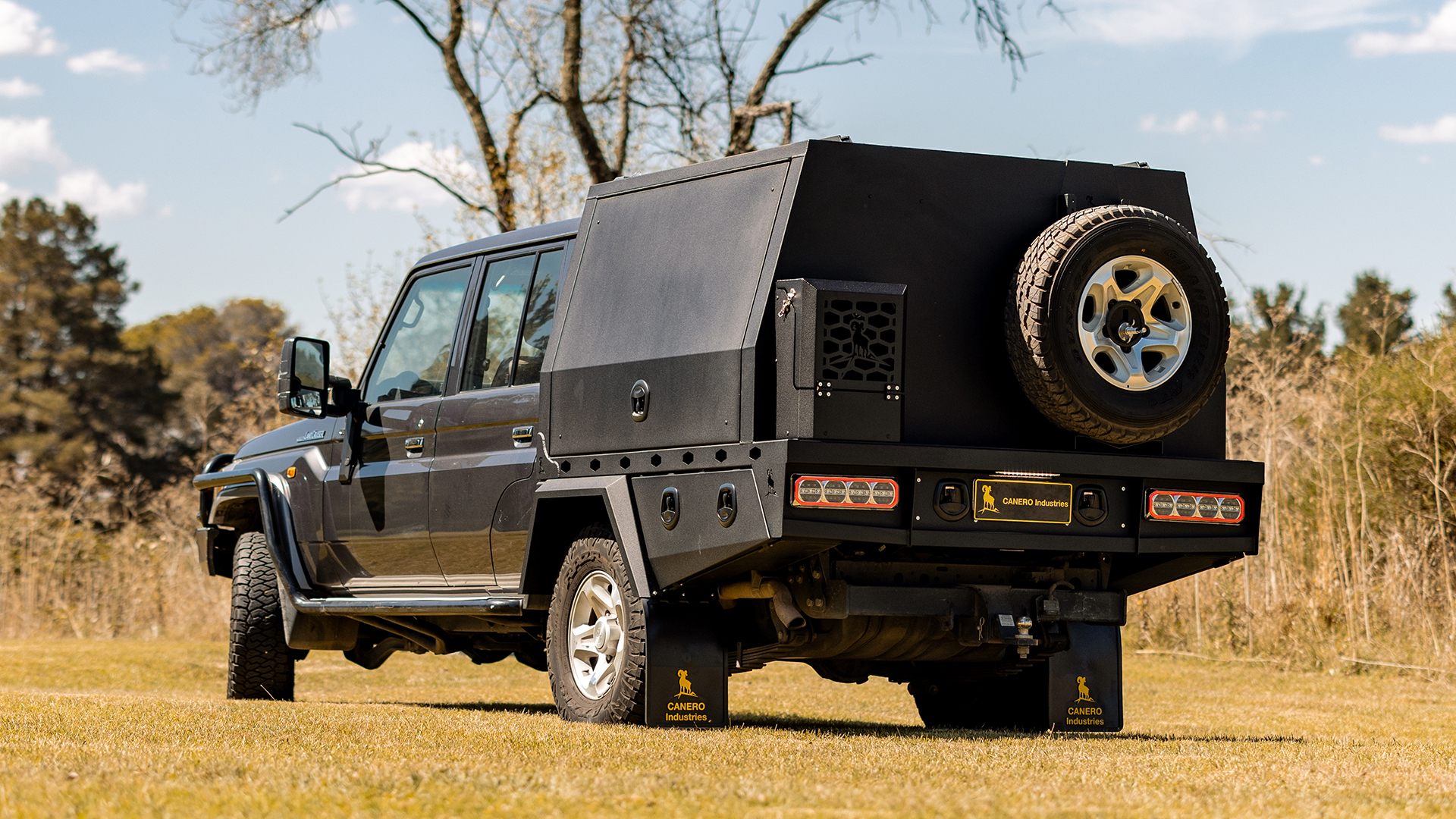
Here’s a real-world scenario: a 79 Series dual-cab with a Canero aluminium tray and removable three-quarter canopy built to last.
The tray is 1.5m long, 1.8m wide, TIG-welded 3mm aluminium with rounded corners and reinforced drawbar. The removable canopy bolts on in four points, adds 50kg, and comes off in 20 minutes if you need the open tray. Fitout includes a full-width drawer fridge bay, a split-drawer system for tools and clothing, a steel-pipe roof rack, and jerry can holders for two 20L cans.
Inside the canopy: a Dometic 75L fridge in the drawer bay, bench seating with lockable storage underneath, LED lighting with 12V USB charging points, a 60L under-tray water tank with a 12V pump and shower head, and a Victron MultiPlus 2000W system with 200Ah battery mounted in the driver ‘s-side cupboard.
Battery is charged by the vehicle alternator, a 300W solar panel on the roof rack, and optional shore power when you’re at a caravan park. The system monitors temperature, battery state of charge, and power flow through a small touchscreen mounted above the driving cab for real-time visibility.
Total investment: tray $8,500, removable canopy $16,000, fitout and 12V system $12,000. You’re at $36,500 all up. It’s not cheap, but you’re building a vehicle that’ll handle six weeks in the Kimberley, weekends at the beach, and still carry tools for side projects. Resale value is strong because the next owner wants exactly this capability.
Real-world example: Mark Bermingham’s 79 Series touring build. His vehicle has covered over 100,000km since 2019, including remote Antarctic expeditions, multiple trips through the Outback, and regular weekend trips. The build is unchanged from what Canero delivered, minus wear items. That’s the longevity and reliability you’re buying.
Budget context: if you’re starting from a standard 79 Series ($40K–$60K for a decent used model), you’re looking at $20K–$50K additional investment depending on your 12V tier and fitout complexity. Total cost of a genuinely capable touring rig is $60K–$110K. That sounds like a lot, but it’s cheaper than a new vehicle, and you’re building something tailored exactly to how you actually travel.
If the budget is tight, start with a tray and drawer system, then upgrade to a removable canopy and 12V system in year two. Your vehicle improves incrementally, and you’re not overextended financially. This approach lets you spread costs while building capability methodically and sustainably.

Next Steps
Choosing the right canopy is critical because you’re committing to a significant investment that will shape your touring experience. This decision will affect your comfort, safety, functionality, and enjoyment out on remote Australian tracks for the next decade. Take your time, do your research, and ask all the questions before signing off on any order.
Choosing a touring setup isn’t simple, but it’s important. Get it right, and you’ll spend five years exploring Australia in a vehicle that actually works reliably. Get it wrong, and you’ll be frustrated every time you go anywhere.
Talk to our team at Canero. We build touring rigs every week, and we know which combinations work and which ones create headaches on the road. We’ll walk you through your options, show you real builds in the workshop, and give you a quote that’s the actual cost, not inflated.
Get in touch for a consultation or a quote. We’ll build your LandCruiser into something genuinely extraordinary.
Get in touch for a consultation or a quote. We’ll build your LandCruiser into something genuinely extraordinary.